
Stop Referring to the Confederate Monument in Arlington National Cemetery as a "Reconciliation Monument"
Secretary Hegseth has announced his intention to reinstall the monument in 2027.

On Tuesday Defense Secretary Peter Hegseth tweeted that the Trump administration intends to restore a Confederate monument in Arlington National Cemetery, which had been removed in December 2023. The monument was dedicated in 1914 and stood at the center of roughly 350 Confederate graves at a location referred to as Section 16.
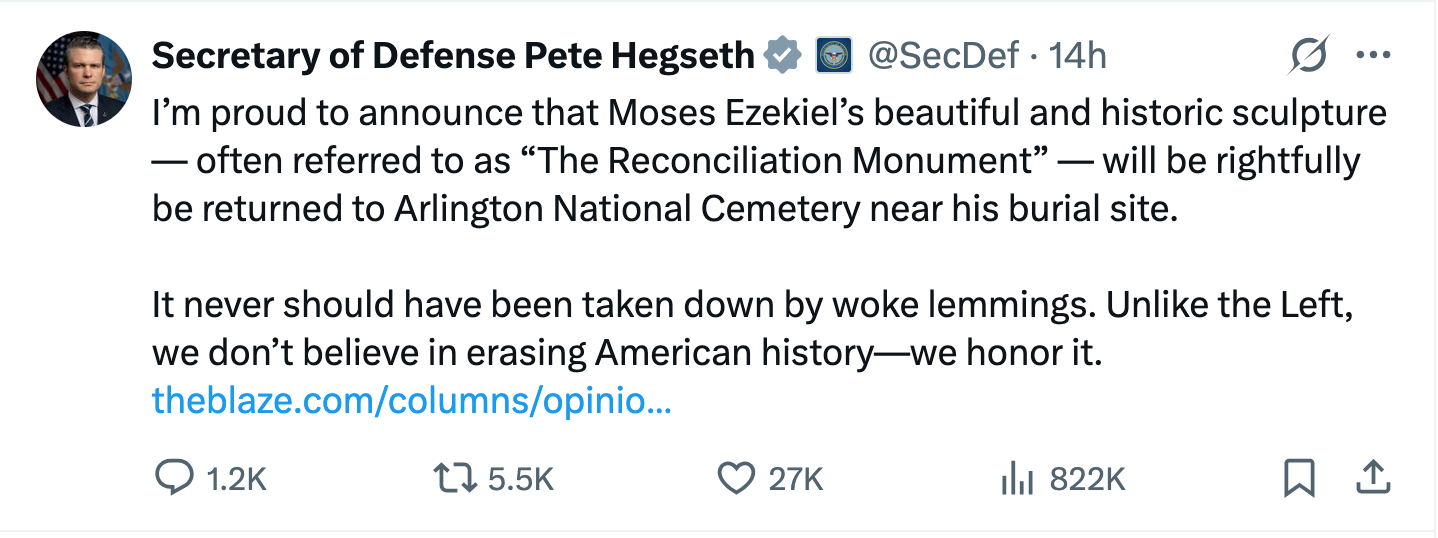
A number of things are worth pointing out about Hegseth’s tweet. First, notice that he never refers to a Confederate monument or the Confederacy. Anyone unfamiliar with the identity of this monument would have no idea what he is referring to. It suggests that the defense secretary understands just how controversial his announcement is and also reveals his embarrassment in failing to refer to it as such.
Instead, he refers to the monument as a “Reconciliation Monument.” Referring to it as such has become a way for neo-Confederates to avoid the monument’s true history and any analysis of the monument itself. No one at the time of the monument’s dedication referred to it as such, including the United Daughters of the Confederacy, who offered Moses Ezekiel, a Confederate veteran, the commission to create the monument.
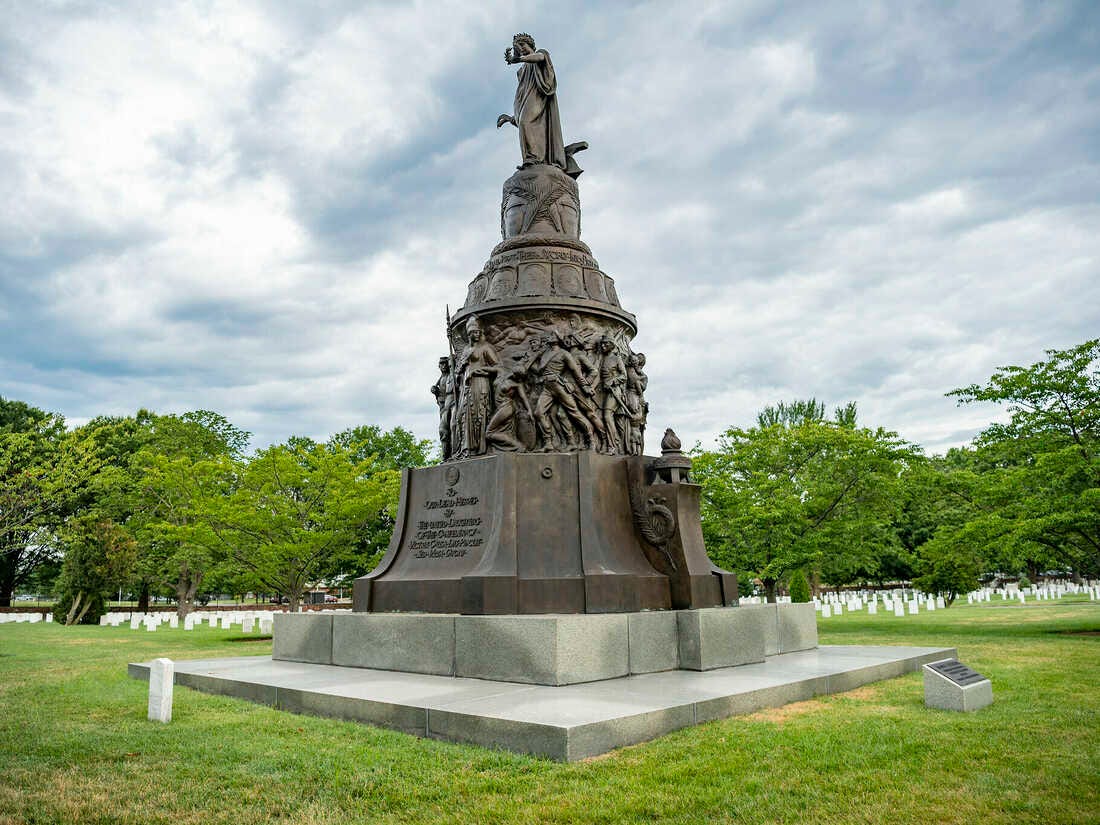
In short, referring to this monument as a “Reconciliation Monument” is a willful act of deception away from the fact that is a celebration of slavery and of the Confederacy itself. There is nothing reconciliationist about it.
This was by design.
I have written extensively about the history of this monument and the events leading up to its dedication. If you want to dig into the details, I recommend the Wikipedia entry on the monument, which is quite good. You can also watch an interview that I did with fellow historian Karen Cox when the monument was removed.
Interpreting the Confederate Monument in Arlington National Cemetery: A Conversation With Karen Cox

Anyone who has followed the debate surrounding the history of the Confederate monument in Arlington National Cemetery has had to sift through a great deal of misinformation. To help us better understand this history, I am joined by Dr. Karen Cox, who teaches at the University of North Carolina—Charlotte. Dr. Cox literally wrote the book on the United Da…
The monument did, in fact, emerge out of a growing spirit of reconciliation between North and South by the early twentieth century. Following a tour of the South in 1898, President William McKinley authorized the military to set aside a plot of land at Arlington to reinter Confederates buried in cemeteries around northern Virginia as well as a small number in Arlington. Eventually, the UDC was allowed to commission a suitable monument.
What is important to understand, however, is that the embrace of reconciliation was never complete. President Woodrow Wilson, a Democrat and the first president from the South to hold the office since the Civil War expressed a clear reconciliationist sentiment:
My privilege is this, ladies and gentlemen: To declare this chapter in the history of the United States closed and ended, and I bid you turn with me with your faces to the future, quickened by the memories of the past, but with nothing to do with the contests of the past, knowing, as we have shed our blood upon opposite sides, we now face and admire one another.
Representatives of the Grand Army of the Republic—the Union veterans organization—attended the dedication ceremony, but plenty of veterans expressed strong disapproval that a cemetery that was created as a final resting place for those who “gave the last full measure of devotion” would be desecrated by adding a Confederate section.
Reconciliation was incredibly complicated at this time.
Civil War Memory, Reconciliation, and Social Media: A Cautionary Tale

Defenders of the Confederate memorial in Arlington National Cemetery staked their defense on the belief that the memorial represents reconciliation. In fact, a number of people referred to it specifically as the “Reconciliation Monument.” As I have pointed out on numerous occasions…
What is indisputable is that the UDC did not commission Ezekiel to create a reconciliationist monument. Their goal was to dedicate an unapologetic celebration of slavery and the Confederacy on the ground of Confederate general Robert E. Lee’s former home and that is exactly what Ezekiel delivered.
At the time, the UDC was engaged in a war to control the narrative of the Civil War and Reconstruction and they did this by dedicating monuments and censoring textbooks used by students in classrooms across the country.
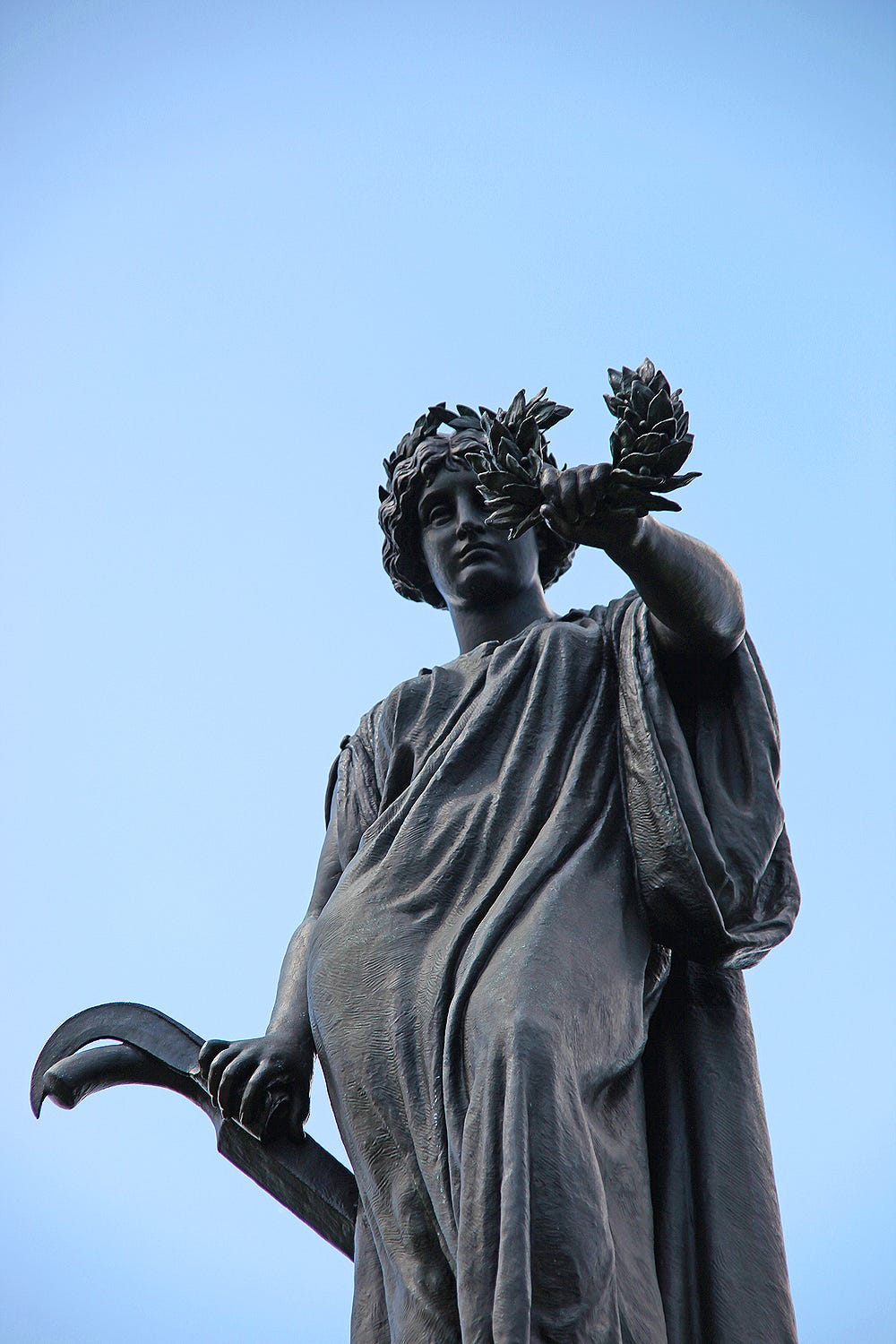
As for the Arlington monument, a number of motifs point to a decidedly anti-reconciliationist sentiment. The most obvious one is the Latin inscription at its base: “The Victorious Cause was Pleasing to the Gods, But the Lost Cause Pleased Cato.” The larger-than-life figure of a woman representing the South faces south, ensuring that the sun will always shine on the face of the figure—another way of representing approval and vindication.
The figure's head is crowned with an olive wreath, which is both sacred to Minerva (Roman goddess of war and wisdom) and a symbol of peace. The figure's left hand extends a laurel wreath toward the south in acknowledgment of the sacrifices made by Confederate soldiers.
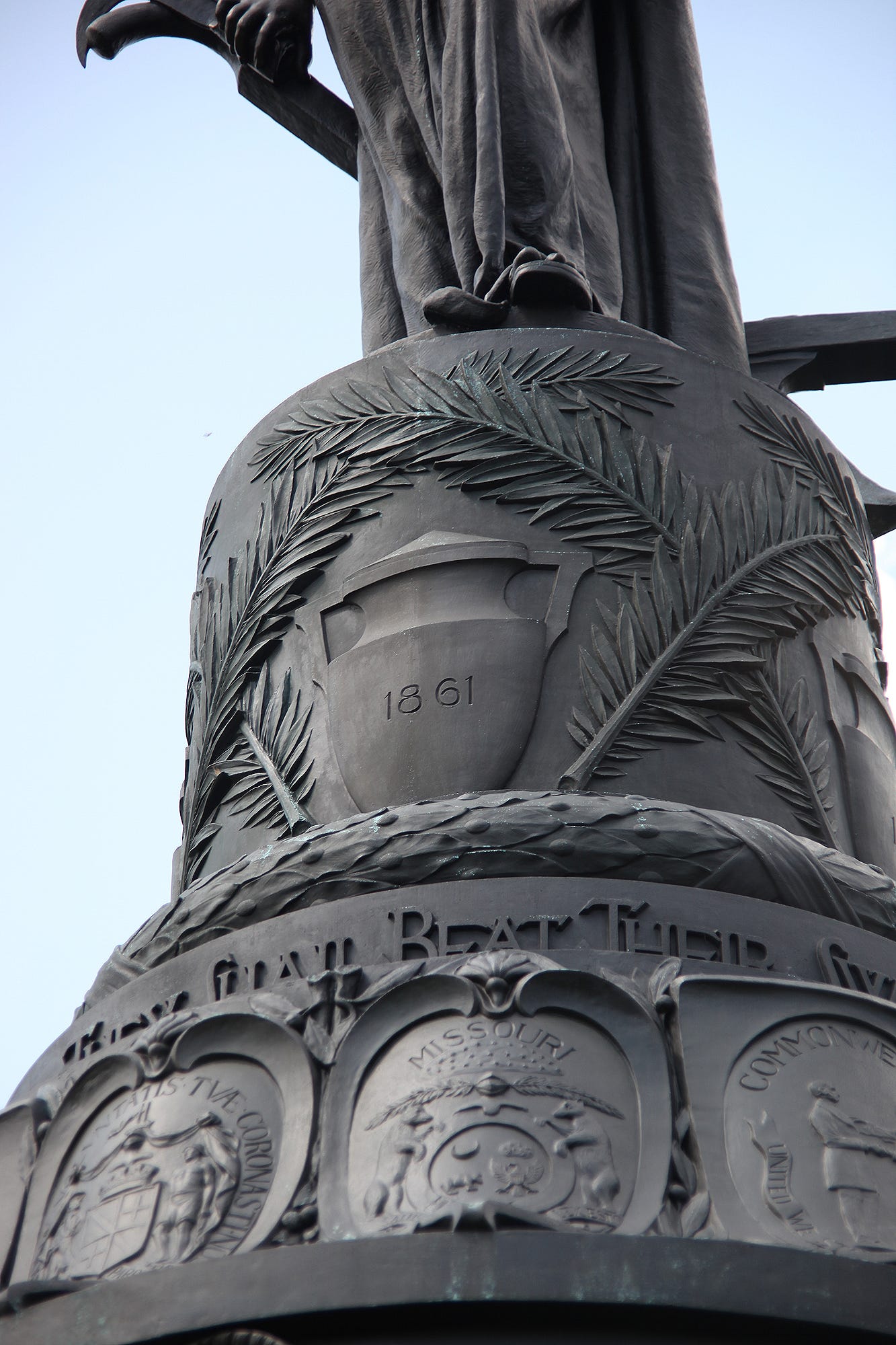
Cinerary urns and shields bearing the coat of arms of each state, including that of Maryland, Missouri, and Kentucky, which never joined the Confederacy, support the topmost figure on the memorial.
The figures marching in lock step around the middle of the memorial represent individuals from different professions and backgrounds, all of whom are now united around the Confederacy. This reinforces one of the key Lost Cause myths of a united Confederacy and ignores the large number of Unionists as well as the enslaved population of the South—roughly half the region’s population—that neither supported the Confederacy or actively fought against it.
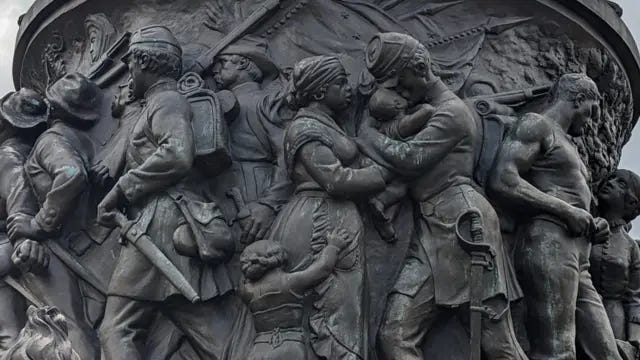
Then there is the depiction of African Americans, which was intended to reinforce the myth of the ‘loyal slave.’ Three figures from the left you can barely make out the face of an African American man in Confederate uniform among the other soldiers. While some people today mistakenly refer to him as a Black Confederate soldier, Ezekiel was representing the body servant or personal slave of a Confederate officer.
Even more problematic is the image of the ‘faithful Mammy’ figure who receives the officer’s child before going off to war. The message is clear. Enslaved people were never interested in their own freedom. They remained loyal to their masters and the Confederacy until freedom was forced on them by ‘invading Yankees.’
By 1914 this amounted to an intentional whitewashing of a memory of emancipation and the role of Black United States soldiers in helping to save the Union, end slavery and crush the slaveholder’s rebellion.
This is the story that Pete Hegseth is too ashamed to reference in his tweet. This is what he and other neo-Confederates ask us to refer to as a “Reconciliation Monument.”
If Hegseth and others are so intent on bringing ‘reconciliation’ back to Arlington National Cemetery, I have a recommendation. Head on down to Section 27 with roughly 1,800 flags and decorate the graves of the United States Colored Troops, whose final resting place is what was originally a segregated section of the cemetery.
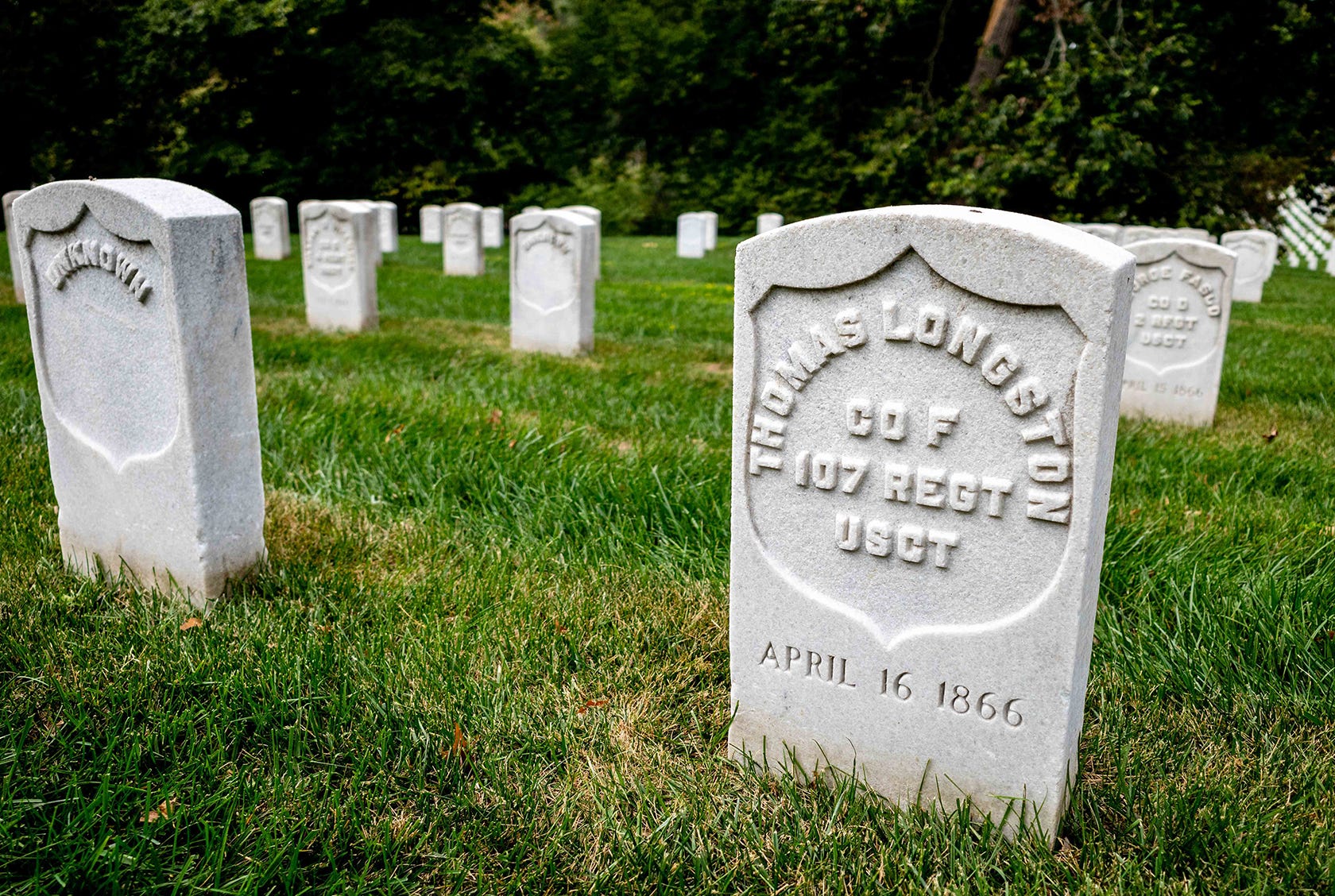
Let’s remember that this is the same administration, which scrubbed the content of many of its websites that explores the rich history of African Americans. This included Arlington National Cemetery’s own website—a story that I first broke back in March.
As the nation ‘reconciled’ around newly dug Confederate graves and a massive monument, in 1914, these grave sites were largely left unattended. Even today, very few visitors make their way to this corner of the cemetery to pay their respects.
Who, I ask, deserves more of our attention? Whose honor deserves to be restored?
Men who fought for a government whose sole object was the destruction of the United States and the independence of a slaveholding republic or men who fought to restore the “Last Best Hope Of Earth”?
Maybe this will be a different monument like Hegseth's fake "restoration " of the old base names.
It is quite a lot to see a MAGA sycophant call other people lemmings.