
Pedestal Without a Cause
Pensacola relocates the pedestal of its former Confederate monument to a local cemetery while the statue itself remains in storage.

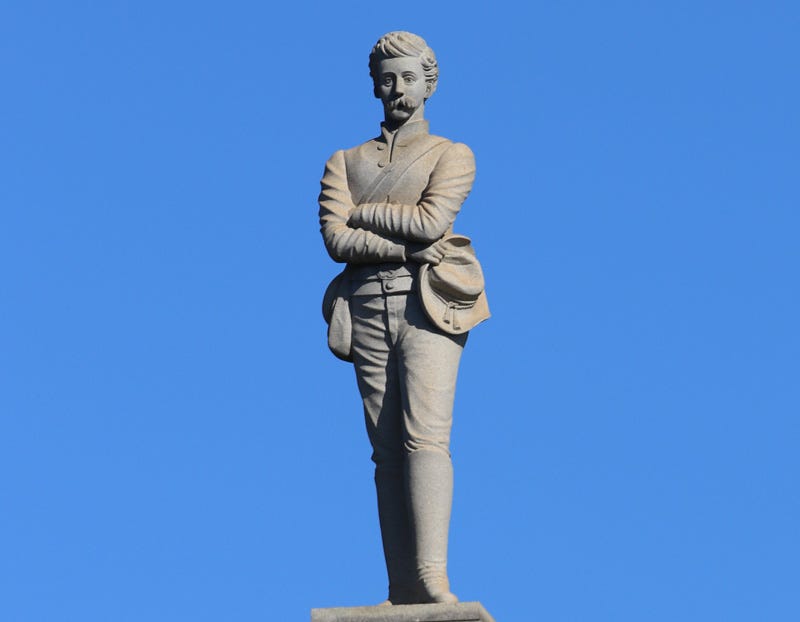
This might just be a first. The city of Pensacola has transferred the base of its former Confederate monument to St. John’s Cemetery, where it is now being installed near the grave of Edward A. Perry, the Confederate general and Florida governor who helped push for the original monument.
The city donated the base, the cemetery is covering the cost of installation, and the statue of the Confederate soldier that once stood atop it remains in storage, where it has sat since crews removed the monument from Lee Square in October 2020 following a city council vote and years of legal challenges that ultimately upheld the city’s decision.
I have followed countless monument removals over the past decade, but I cannot recall another case in which a community split a monument in two and relocated only its pedestal.
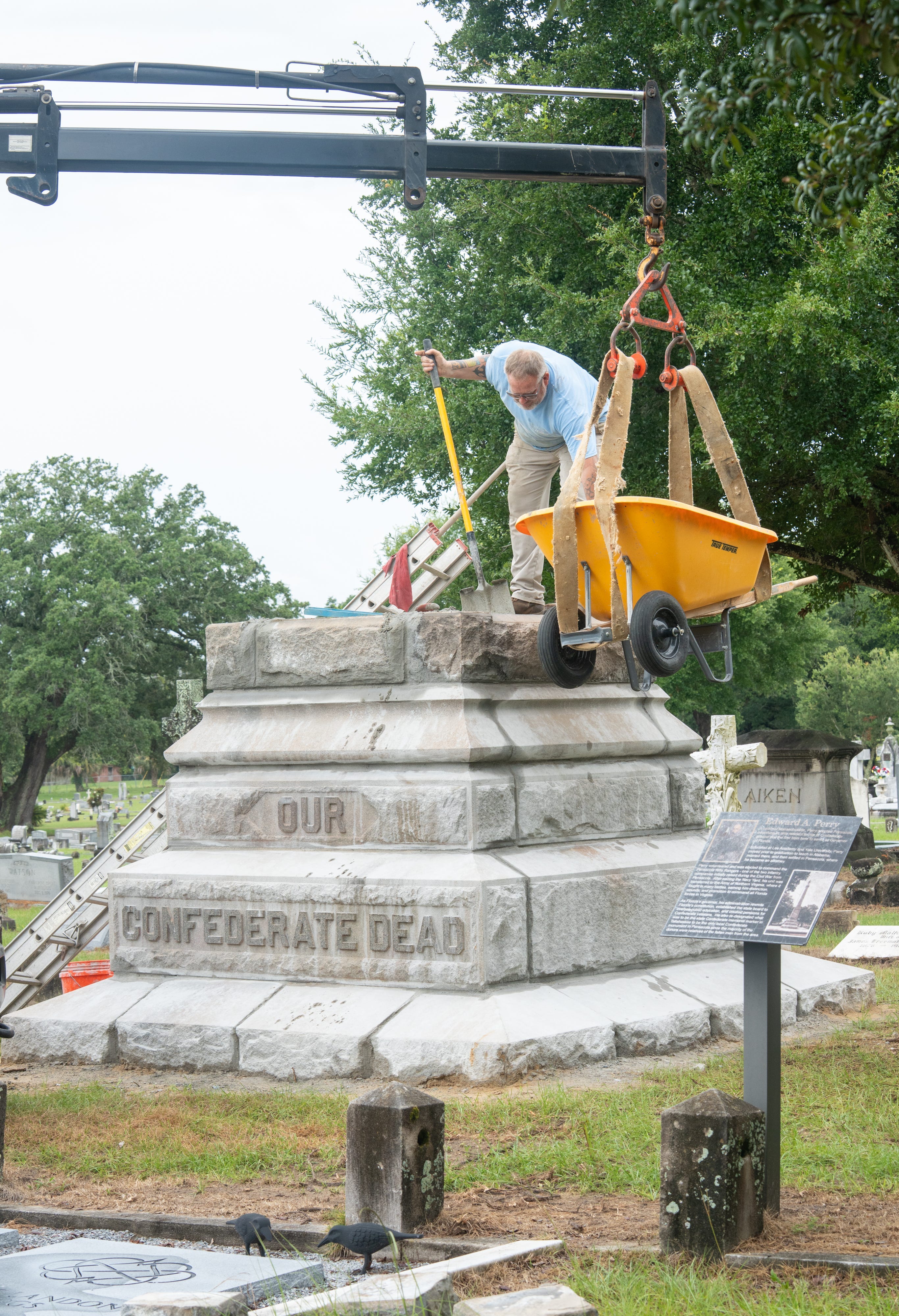
The cemetery’s leadership was explicit about the reasoning. The base functions as a cenotaph, an empty tomb honoring the dead buried elsewhere, and accepting it fit the cemetery’s mission of remembrance. Taking the soldier as well, they worried, would have amounted to a political statement.
The University of West Florida Historic Trust considered acquiring the statue before walking away, leaving the bronze soldier without a home for the foreseeable future.
Generally speaking, I don’t have a problem with relocating a Confederate statue to a cemetery. I have made this argument for years. What matters is that these monuments no longer occupy prominent public spaces such as parks, town squares, and courthouse grounds, where they projected the authority of the Lost Cause and white supremacy onto every resident who passed beneath them. Cemeteries are different.
They are places set aside for mourning the dead, which is much closer to what defenders of these monuments have long claimed they were for. Placing the cenotaph near Perry’s grave even closes a certain historical circle, returning the memorial to the man who championed it.
Don’t want to take out a paid subscription, but want to support my writing and research projects? You can also throw a couple bucks into my Venmo for a cup of coffee. Every little bit helps. You can find me @kevin-levin-37. Thanks for your support.
And yet this remains a strange decision. A pedestal without its statue is an artifact stripped of the very thing that gave it meaning. I suspect that most visitors to St. John’s will have little understanding of what they are looking at without signage. They will encounter a granite base that once elevated a Confederate soldier above downtown Pensacola and see only an oversized marker among the headstones.
The cemetery hoped to avoid politics by declining the soldier, but the result is a memorial that no longer explains itself. If anything, the relocation makes the case for interpretation even stronger. A well-crafted marker could tell the full story, from the monument’s late nineteenth century dedication and Perry’s role in it through the reckoning of 2020 that brought it down.
Perhaps that is the real lesson here. These objects do not stop making arguments when they leave the public square. They simply make quieter ones. Whether the cenotaph at St. John’s becomes an occasion for honest history or another site of forgetting will depend entirely on what the community chooses to say about it.
What do you think?
UPDATE: A reader over on Bluesky shared this story out of Alexandria, Virginia. https://www.alxnow.com/2023/02/02/the-base-of-the-appomattox-statue-has-resurfaced-atop-confederate-graves-in-alexandria/
The more I read about the CW lost cause mythology, the more I can’t understand the relentless attempt to display statues of the men who made it their life mission to preserve the institution of slavery. While moving a confederate monument, or a monument’s plinth, to a cemetery might seem more acceptable somehow, I don’t think it’s even slightly appropriate to keep and/or display them anywhere. Maybe my opinion on this could be considered to be too harsh, but I don’t think Germans have chosen to honor former Nazi’s with statues.