
Henry Johnson's Gettysburg
He followed the 4th Texas to Little Round Top, nursed a dying Confederate officer for three weeks, and then chose freedom.

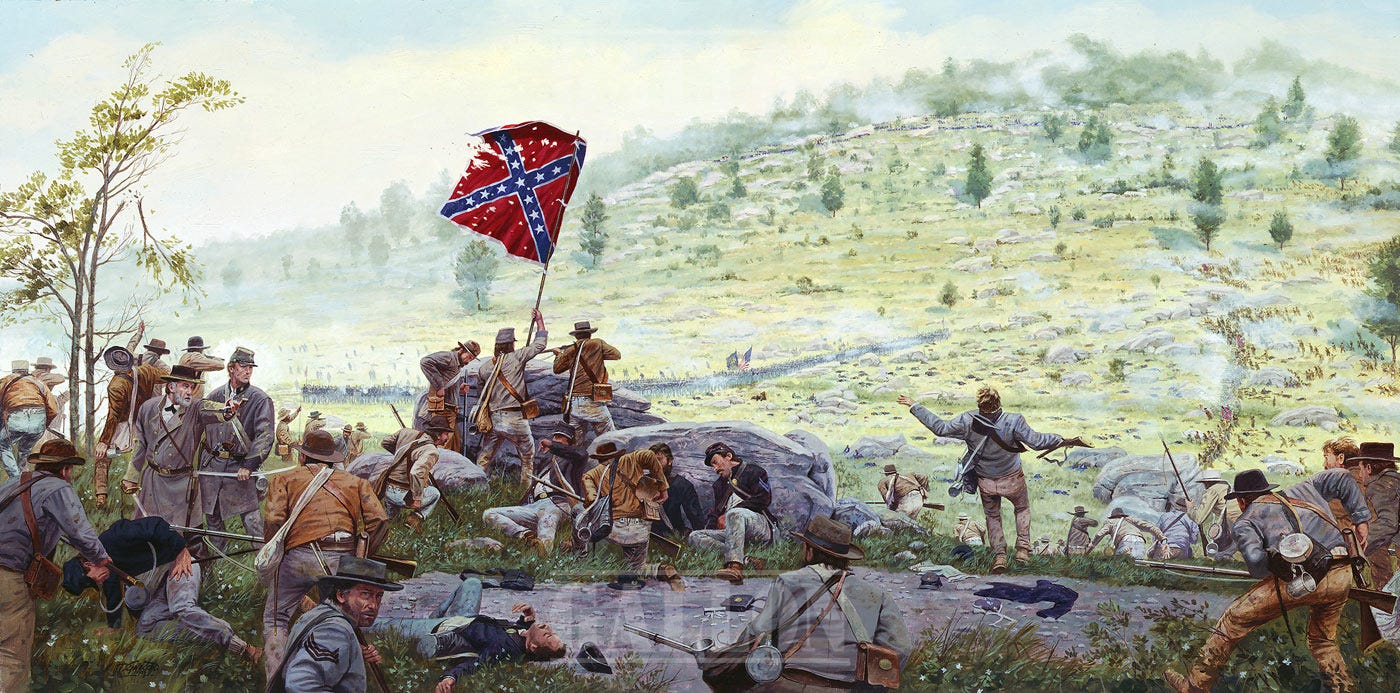
On the morning of July 2, 1863, the 4th Texas Infantry lay near Herr Ridge west of Gettysburg, part of Jerome Robertson’s Texas Brigade in John Bell Hood’s division of Longstreet’s First Corps. The men were exhausted from an overnight march. Among them moved a small population of enslaved men who cooked, foraged, and cared for Confederate officers.
Lieutenant Colonel Benjamin F. Carter of the 4th Texas was accompanied by Henry Johnson, his body servant, who had made the long journey from Texas to Pennsylvania and now found himself, an enslaved man, marching across free soil in the service of an army fighting to keep him in bondage.
Johnson accompanied Carter through the frustrations of the day. General Robert E. Lee’s plan for the day included a coordinated, massive assault on both of the Union army's flanks. Longstreet’s corps was ordered to assault the Union left.
The division spent hours waiting before undertaking Longstreet’s long countermarch, ordered after the initial route proved visible to the Union signal station on Little Round Top.
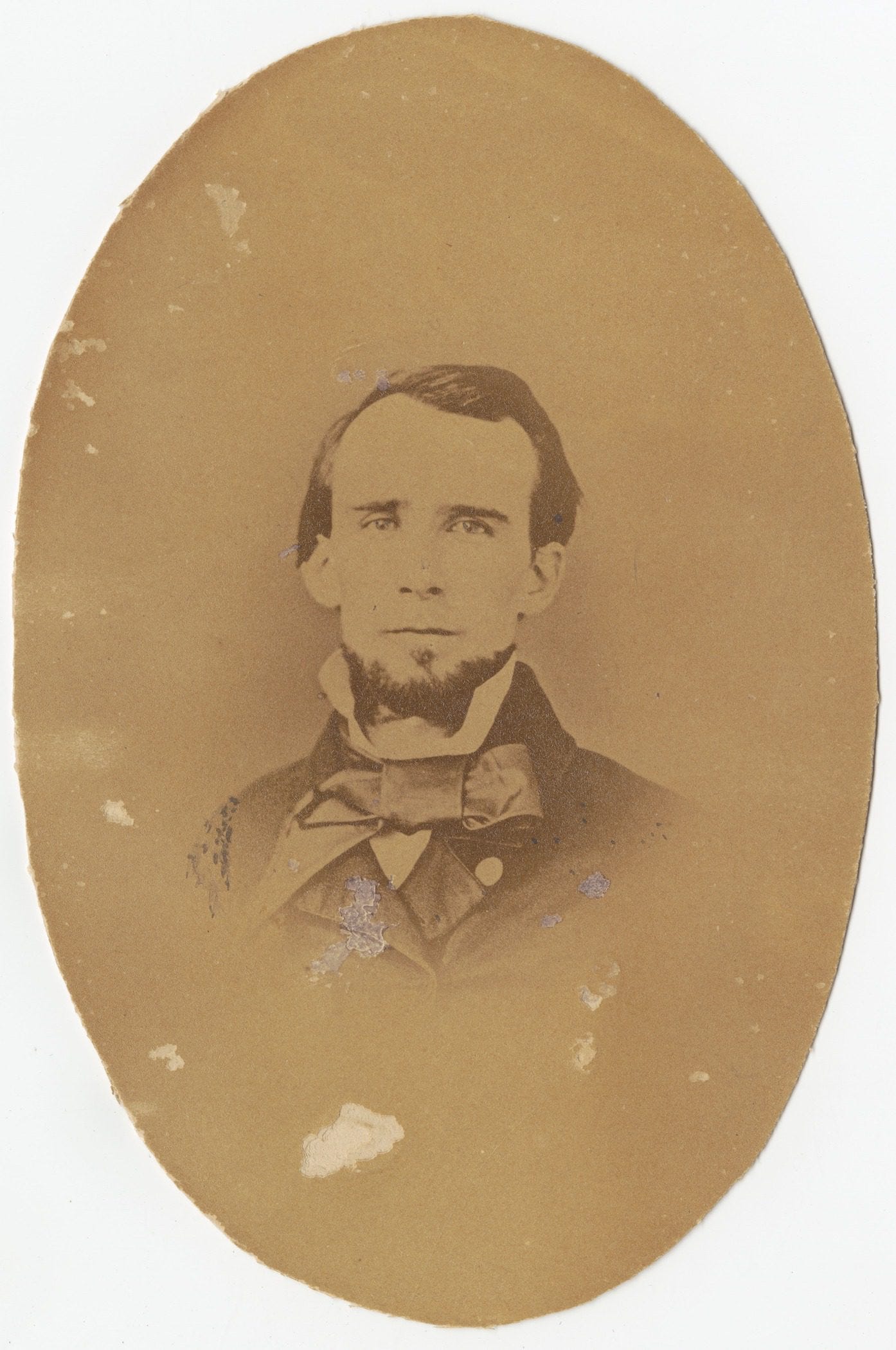
It was mid-afternoon before Hood’s men deployed astride the Emmitsburg Road near the Bushman and Slyder farms, facing east toward the Round Tops. What Johnson understood of the coming assault we cannot know, but he would have seen what every man in the ranks saw: the rocky heights in the distance and the certainty that many of the men around him would not survive the evening.
The assault stepped off around 4:30 p.m. Robertson’s brigade quickly lost its cohesion. The 3rd Arkansas and 1st Texas obliqued left toward the Rose farm and Devil’s Den, while the 4th and 5th Texas drifted right, crossing the Slyder farm and the Plum Run valley and attaching themselves to Evander Law’s Alabama brigade.
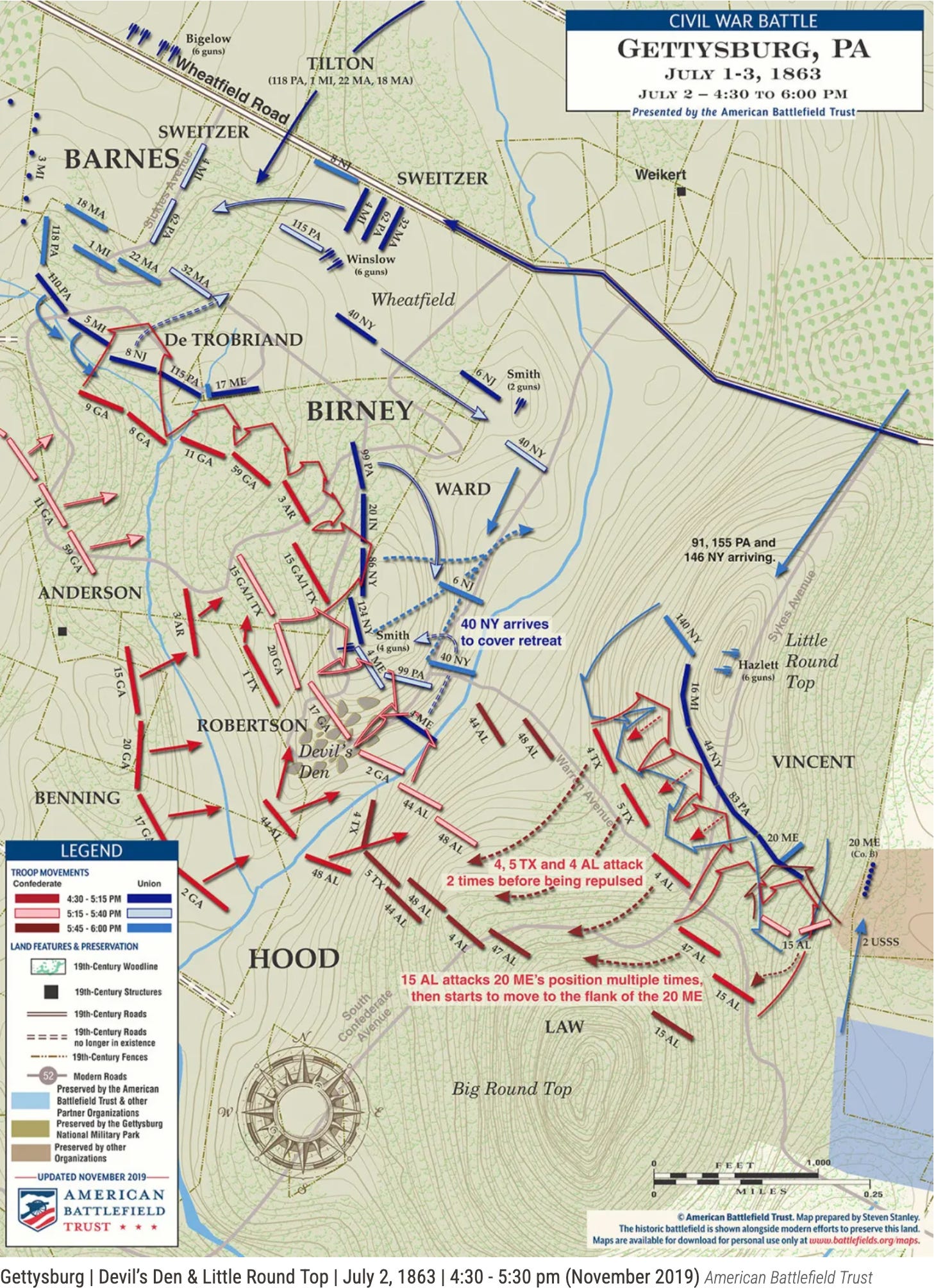
Johnson likely remained behind once the regiment became engaged. Camp servants were not expected to go forward into battle, and most waited with the baggage or near the field hospitals. But the boundaries of a Civil War battlefield were never clean. Union artillery on the heights reached well beyond the front lines, and Johnson may have been close enough that his own life was threatened by a battle he had no stake in winning.
The 4th Texas struck the western slope of Little Round Top, where Strong Vincent’s brigade had arrived only minutes earlier. The Texans made at least two and possibly three distinct charges up the rocky face against the 44th New York and 16th Michigan. The fighting was close and murderous.
Hood had already fallen wounded, Robertson would follow, and the 4th Texas lost its field officers in quick succession. Colonel John C. G. Key was wounded, and Carter fell with terrible wounds to the face and leg south of Devil’s Den, leaving Major John P. Bane in command.
The final push briefly threatened to break the 16th Michigan on Vincent’s right, but the arrival of the 140th New York and the exhaustion of men who had marched most of the previous night ended the effort. The survivors fell back among the boulders along Plum Run and traded fire with the Federals above until dark.
For Johnson, the battle’s end marked the beginning of his own ordeal. He located Carter and stayed with him at a nearby field hospital as the army counted its losses.
The regiment had carried roughly 415 men into action and lost a quarter or more of them. When Lee’s army began its retreat on July 4, Carter was too badly injured to travel far. He was eventually removed to the Academy school house in Chambersburg, and Johnson went with him.
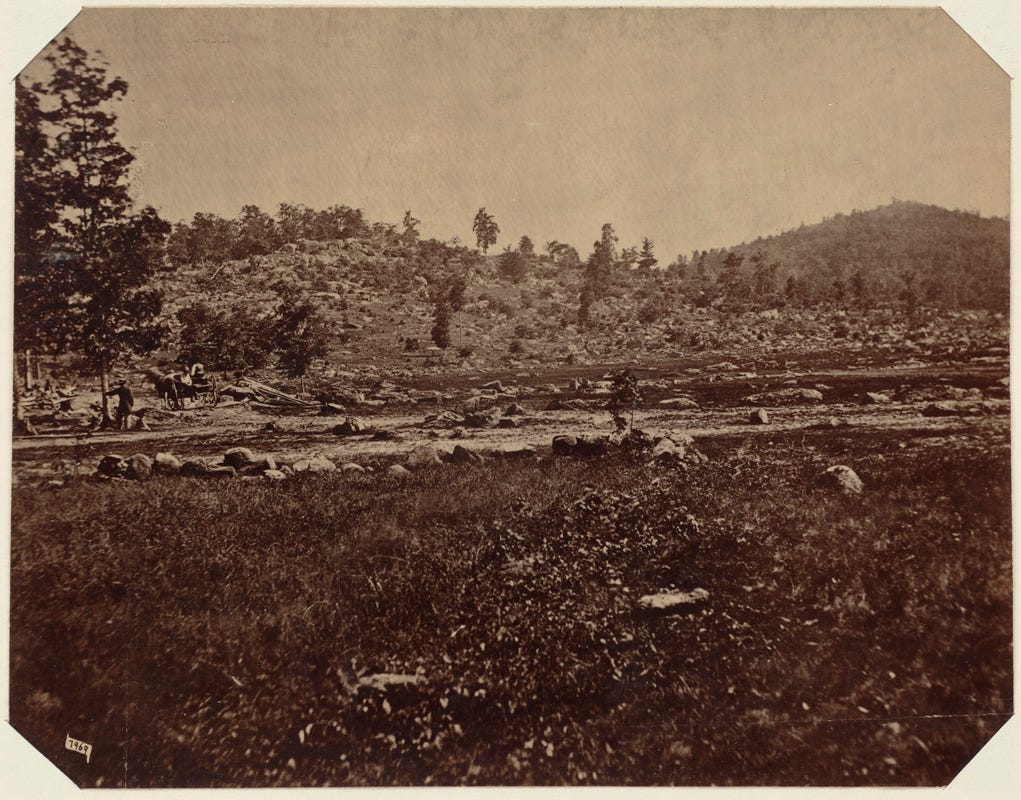
Here the historical record forces us to confront a remarkable fact. Johnson was an enslaved man in Pennsylvania, surrounded by a victorious Union army, with every opportunity to walk away. He stayed. He nursed Carter through nearly three weeks of suffering until the lieutenant colonel died on July 21.
It is tempting to read Johnson’s decision through the Lost Cause lens of the faithful slave, and postwar Confederate memory did exactly that with men like him. But loyalty to a dying man is not loyalty to slavery and Johnson’s next decision makes the distinction unmistakable.
With Carter dead and his obligations, however he understood them, discharged, Johnson did not return to Texas and to bondage. He traveled instead to Baltimore to begin a new chapter of his life as a free man. That freedom proved heartbreakingly brief.
Johnson died the following year, having tasted barely twelve months of the liberty the war would eventually secure for four million others.
The snapshots we have of men like Henry Johnson are frustratingly small. He appears in the record because of his proximity to a Confederate officer. He disappears from it almost as soon as that connection was severed.
But even these fragments complicate the stories we tell about Gettysburg. The Army of Northern Virginia brought slavery with it into Pennsylvania in the summer of 1863, in the persons of thousands of enslaved men who cooked its meals, tended its wounded, and buried its dead.
Johnson’s journey from the slopes below Little Round Top to a deathbed vigil in Chambersburg to freedom in Baltimore reminds us that these men were never merely servants. They were people navigating impossible circumstances.
And when the moment came to choose, Henry Johnson chose freedom.
You can also throw a couple bucks into my Venmo. Every little bit helps. You can find me @kevin-levin-37. Thanks for your support. I grow more excited about this project with each passing day.
Thank you for making these men's stories better known. They deserve to be remembered as individuals navigating extremely complicated situations during uncertain times.
Thanks for tracing out & highlighting these lived experiences, amidst & around the absences of the "standard" narratives + archives ...