
Calling for the Return of 'Truth and Sanity to American History' is a Child Wailing for Attention

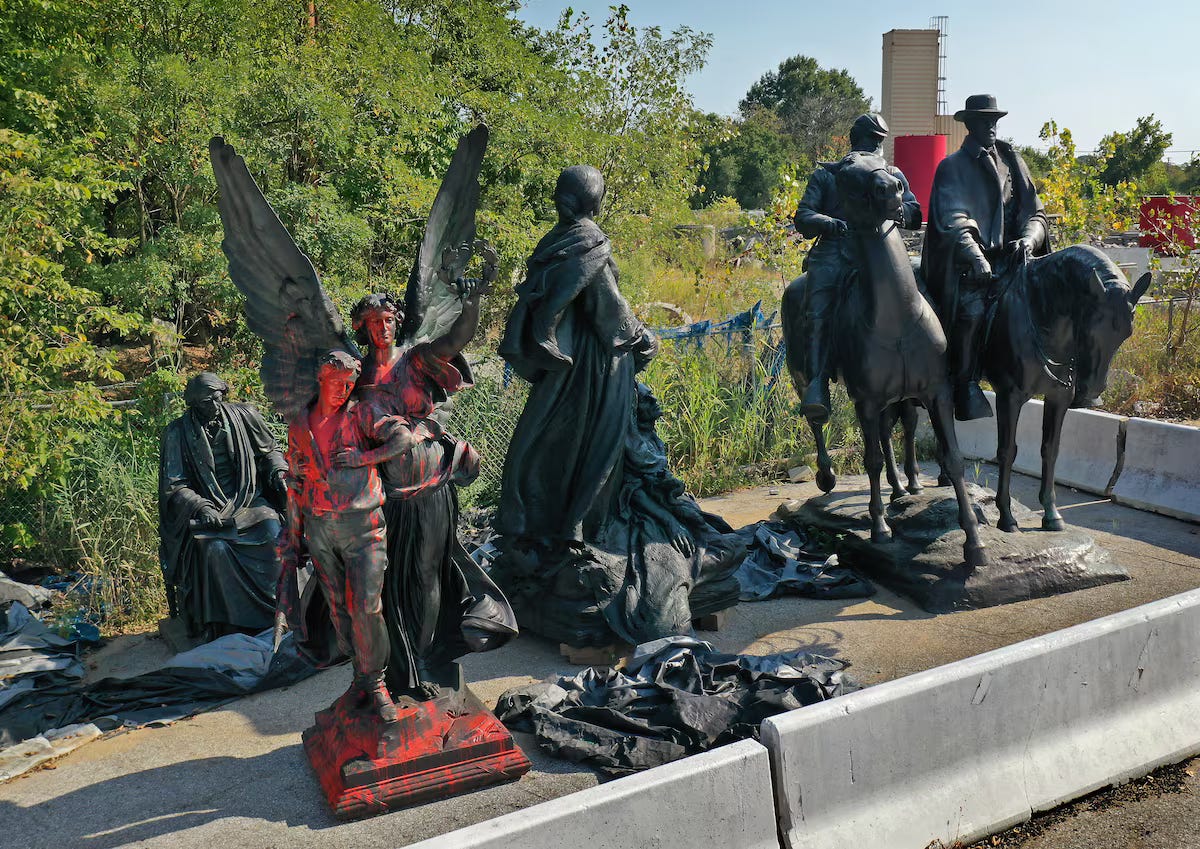
President Donald Trump’s Executive Order to ‘Restore Truth and Sanity to American History’ has already succeeded in one respect. It has all of us talking about monuments and not just any monuments, Confederate monuments. As I have pointed out numerous times over the past few days, the order does not make a single reference to anything having to do with the Confederacy.
Not a single monument has been removed from National Park Service land and only two Confederate monuments have been removed from federal property, including one which was all but destroyed when it was torn down in Washington D.C.’s Judiciary Square.
There is no reason to believe that the president has any authority to return any of the monuments to communities that have chosen—through a legal and open process—to remove or relocate them. That’s how democracy works.
Trump’s order has sent many people into a frenzy over this issue and a number of media outlets have also fallen victim as well. Yesterday, I posted a short essay to this newsletter with the title “Hundreds of Confederate Monuments Will Soon Return.” I chose that title simply as clickbait, but I can’t tell you how many people responded as if this was a fact. They clearly had not bothered to read the essay.
Hundreds of Confederate Monuments Will Soon Return

That seems to be the takeaway for many people and even media outlets, who have read one of President Donald Trump’s most recent Executive Orders that targets the National Park Service and Smithsonian Institution. Here is the section of the order that appears to have sent folks into a frenzy:
Sending people into a frenzy is just what the president hoped to accomplish. We need to stop emboldening him unnecessarily.
As I have said before, there are real threats to the ability of individuals and institutions to interpret American history for the general public, but the question of whether hundreds of Confederate monuments will soon be reinstalled is not one of them.
The first thing to notice is that the debate over monuments has died down significantly since 2020. The removal of Confederate monuments first ticked up in the wake of the heinous murder of nine churchgoers in Charleston, South Carolina in 2015 and continued through the violent rally in Charlottesville in August 2017. The largest number of removals occurred following the police murder of George Floyd in the summer of 2020.
I have maintained a list of removals since 2020. Nine Confederate monuments were removed in 2022, followed by two in 2023 and only one last year. There is no reason to believe that we will see a noticeable uptick this year.
What we witnessed, beginning in 2015, was a long overdue reckoning with these monuments, triggered by long-term and more immediate conditions that made it easy to target Confederate monuments specifically.
I’ve admitted many times before that I was taken completely by surprise by the outrage and speed at which our monument landscape was transformed during this period. Having lived and taught in Charlottesville, Virginia between 2000 and 2011, I routinely brought my students to sites in town and in Richmond to teach them how to understand public monuments.
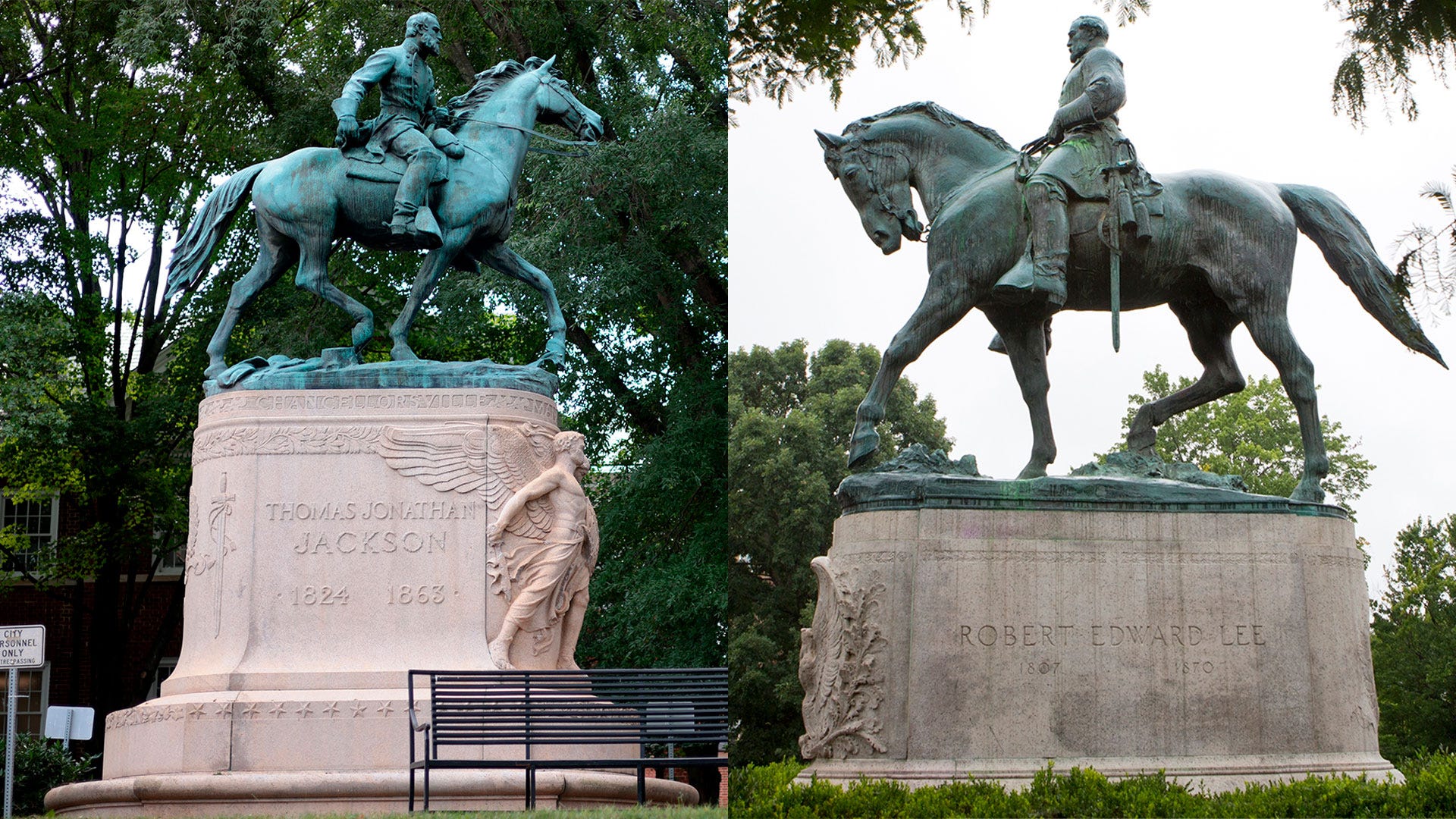
With some exceptions, very few people in Charlottesville paid any attention to the large equestrian monuments of Robert E. Lee and Stonewall Jackson that stood in two prominent parks, located just off the Downtown Mall.
I suspect that very few people paid much attention elsewhere as well, but everyone had an opinion as the controversy heated up. I still chuckle when I think about some of these people, who didn’t think twice about lecturing me about what to think about the monuments. Over night, everyone suddenly became an expert.
Here’s the thing. Most monuments, including Confederate monuments, don’t really matter any more. In an interview with NPR, who covered the president’s Executive Order, Erin Thompson, author of Smashing Statues: The Rise and Fall of America's Public Monuments, offered the following:
You can't control historical memory by controlling monuments. There's so many people who tell their children other stories, who lead tour groups, who write books. There's so many ways of learning about history that are not looking at some chunk of stone.
This is an important point.
It’s not to suggest that monuments don’t hold meaning or that communities should cease with organizing public discussions about their local commemorative landscapes, but that monuments no longer wield the same influence over how people think about history and even historical memory.
Even if every Confederate monument and flag that has been removed from a public space since 2015 were returned, it would have zero impact on how people think about the past.
Erin is absolutely right. Our understanding of history and memory is shaped in ways that few people could have imagined just a few decades ago, especially through digital tools. It is simply impossible for one person or group to control the narrative.
The president’s Executive Order reminds me of the laws that have been passed in some Republican-controlled states that prevent local municipalities from removing monuments. The laws are itself an admission that people no longer think about the past through the eyes of the Confederate soldier statue on the courthouse grounds.
Of course, we need to recognize and respond accordingly to attempts by the most powerful elected leader in the world to undercut history education in all of its forms.
But we also need to recognize this Executive Order for what it is: A child wailing for attention.
Nuts to these anti-Americans. Decent Americans should take positive, future-focused control of the agenda for national memory. For that effort, there'd be hard going in the near future, but in the long run decency will prevail.
Five years ago in a New York Times op-ed, David Blight wrote, "Freedom in its infinite meanings remains humanity’s most universal aspiration. How America reimagines its memorial landscape may matter to the whole world." He suggested, "Perhaps we need to think of memorializing ideas, concepts, epic historical movements and events." In the Washington Post that year, he proposed, "As a nation, let’s replace a landscape strewn with Confederate symbols with memorialization of emancipation."
Gift links for those essays:
https://www.nytimes.com/2020/07/17/opinion/monuments-history-biden.html?unlocked_article_code=1.704.ekKs.3yrY3S-utVQb&smid=url-share
https://wapo.st/3Ya5kVj
Forgive me for once again exploiting the opportunity, but I'll note that in an essay at History News Network, I proposed that an ideal national emancipation memorial is already available in plain sight: Point Comfort, Virginia. It's the 1619 arrival place of the first captive Africans, and--as Fort Monroe, a quarter-millennium later--it's where the Civil War self-emancipation movement started. It's where the first of hundreds of thousands of enterprising, freedom-striving slavery escapees began, to use a phrase from Eric Foner, forcing the fate of slavery onto the national political agenda once Union warriors--including thousands of self-emancipators--began making emancipation possible. They were some of the most American of all Americans.
https://www.historynewsnetwork.org/article/we-need-a-national-emancipation-monument-at-point-
Well said. My only pushback is that, if the EO could have downstream, tacit effects that embolden communities to put back their confederate monuments, wouldn’t that signal a sort of capitulation to this dog whistle white supremacy that Trump is pushing? As such, could that not teach future generations that their removal, and thus their reframing as a negative manifestation of historical memory over the last decade, was mistaken?