
A Message to Students at Robert E. Lee High School in Midland, Texas

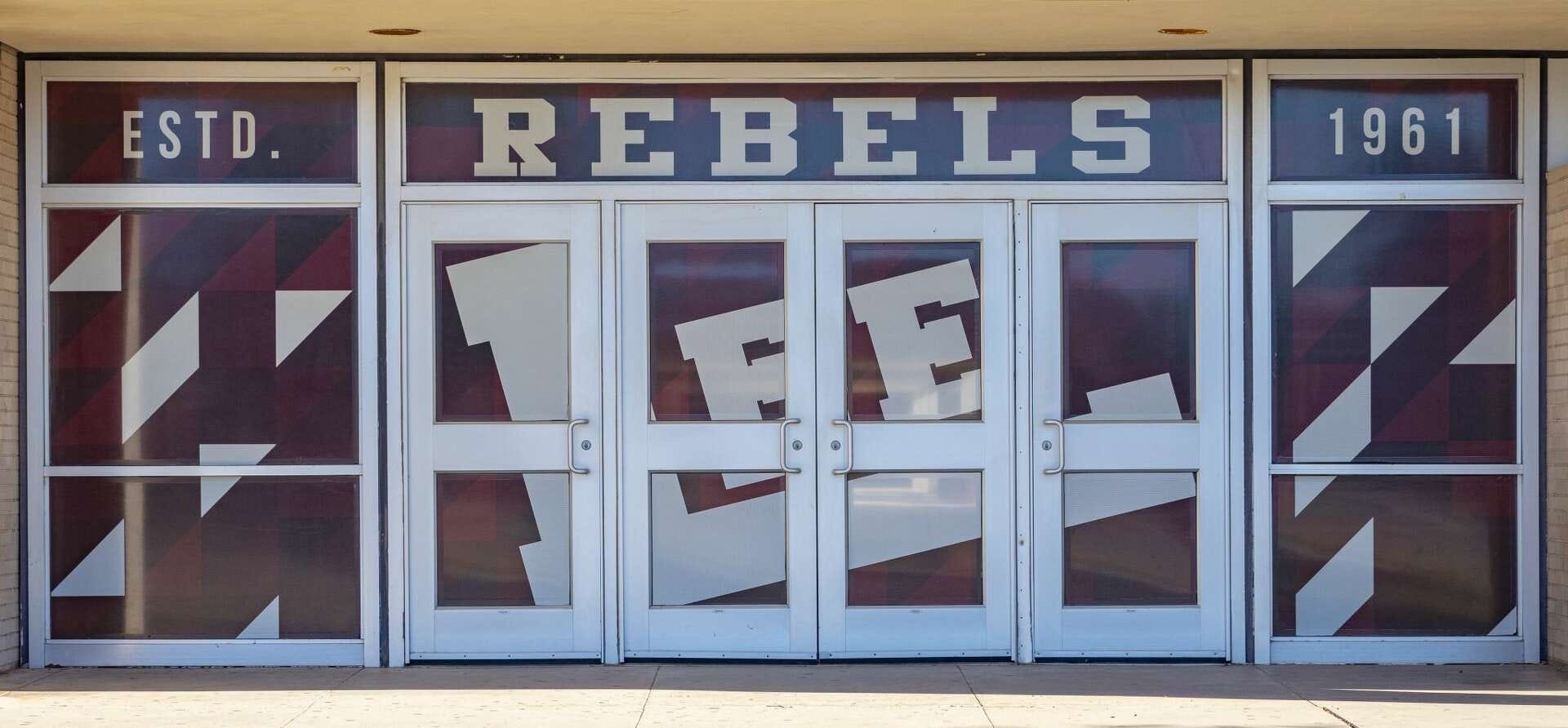
Yesterday your school district’s board of trustees voted 4-3 to rename your school after Robert E. Lee, reversing a former board’s decision to change the name to Legacy High School back in 2020.
Your school is now the second public school district to overturn a previous decision to honor a Confederate leader.
Railing against what he described as toxic political correctness, Matt Friez, a board member who voted to reinstate Lee’s name, said institutions donning Confederate names have ‘outgrown’ their controversies. In a lengthy statement, Friez said that replacing Confederate-era monikers and removing statues was an attack on the ‘country’s heritage.’
OK, so here is some information to help you better understand the heritage of your school’s namesake as well as the initial decision to honor Lee in 1961.
First, it’s important to understand that Lee had no deep connection to your state’s history. He was stationed in Texas twice, first from March 1856 to October 1857, and again from February 1860 to February 1861. During these periods, he served with the Second Cavalry Regiment, primarily patrolling the frontier and protecting settlers from Indian raids.
It goes without saying that the only reason Lee is remembered at all is owing to his role as a Confederate general and his command of the Army of Northern Virginia during the Civil War.
With that in mind, you should be familiar with why Texas chose to secede from the Union and join the Confederacy in the first on February 2, 1861. Thankfully, the state of Texas made this perfectly clear in its Declaration of Causes:
Texas abandoned her separate national existence and consented to become one of the Confederated States to promote her welfare, insure domestic tranquility [sic] and secure more substantially the blessings of peace and liberty to her people. She was received into the confederacy with her own constitution, under the guarantee of the federal constitution and the compact of annexation, that she should enjoy these blessings. She was received as a commonwealth holding, maintaining and protecting the institution known as negro slavery--the servitude of the African to the white race within her limits--a relation that had existed from the first settlement of her wilderness by the white race, and which her people intended should exist in all future time. Her institutions and geographical position established the strongest ties between her and other slave-holding States of the confederacy. Those ties have been strengthened by association. But what has been the course of the government of the United States, and of the people and authorities of the non-slave-holding States, since our connection with them?
Texas, like the rest of the Deep South states that seceded between December 1860 and March 1861, believed that slavery would be safer outside the Union and as part of an effort to create an independent slaveholding republic. All Confederate armies, including the one Lee commanded, functioned as an extension of the government and its stated goals.
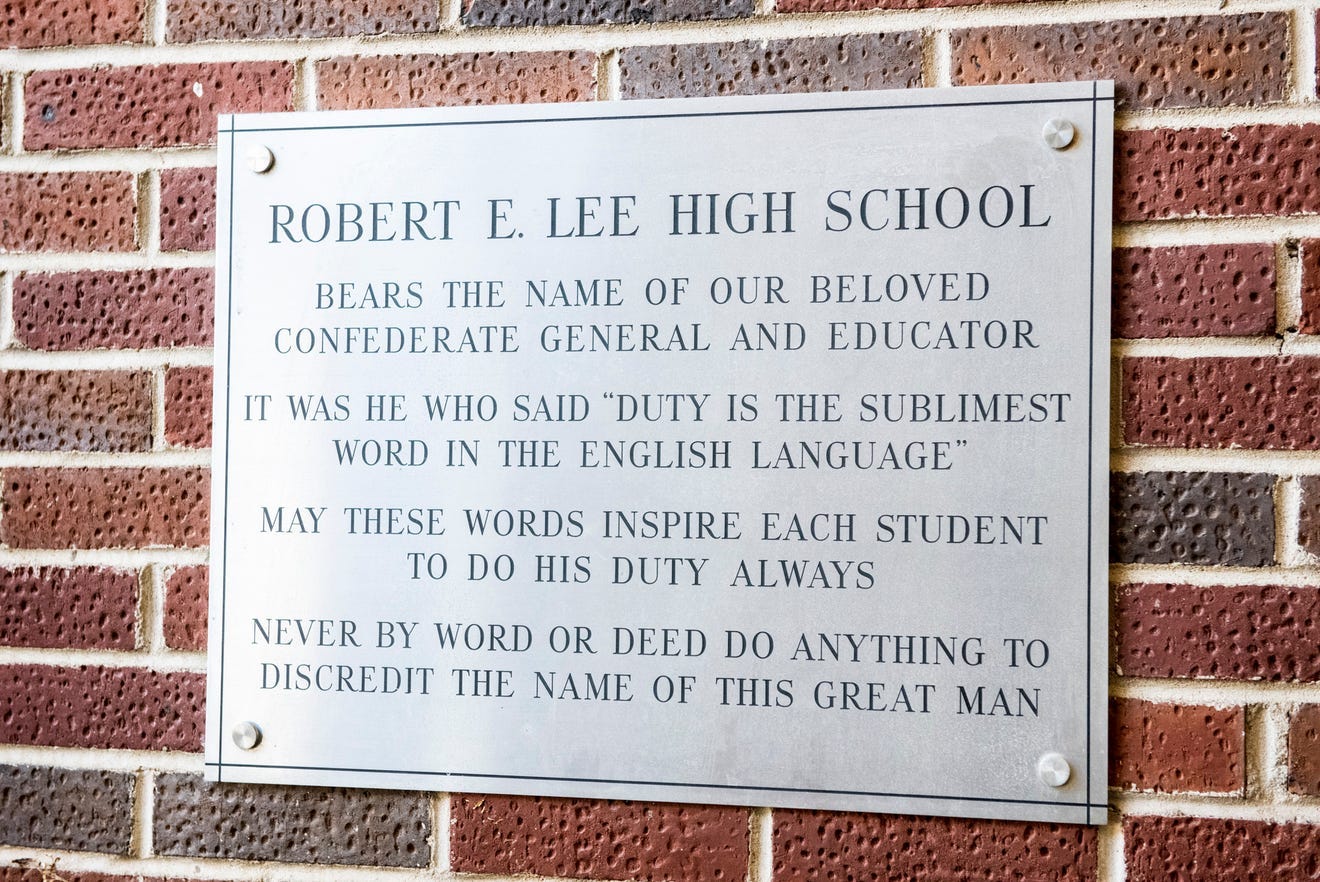
All of this is relevant, but it doesn’t really help you understand why your school was named in honor of Lee in 1961. This is a wonderful opportunity to think about the difference between history and memory.
As a student you’ve spent most of your time doing history. By that I mean, you have been reading your texbook and other materials. Perhaps your teacher has shared some historical documents for you to read and interpret. History involves trying to answer essential questions about the past: What happened? Why did it happen? and What does it mean that it happened or why was it significant?
Memory has more to do with the stories that we choose to tell ourselves about who we are and the values that we claim to uphold as members of a community. We do this in a number of ways by dedicating monuments and statues as well as naming buildings after individuals that the community believes merits such an honor.
Investigating and thinking about the historical context surrounding the naming of your school tells us something important about how white Americans, mainly in the South, chose to remember the Confederacy and the Civil War and how that memory was used to achieve certain ends.
In other words, the naming of Robert E. Lee High School in 1961 has much more to do with the history of the state, region, and country at that time as opposed to the 1860s.
There were two bursts of Confederate commemorative activity in the twentieth century. The first took place roughly between 1890 and 1930 and the other occurred during the civil rights movement. The first focused overwhelmingly on the dedication of Confederate monuments.
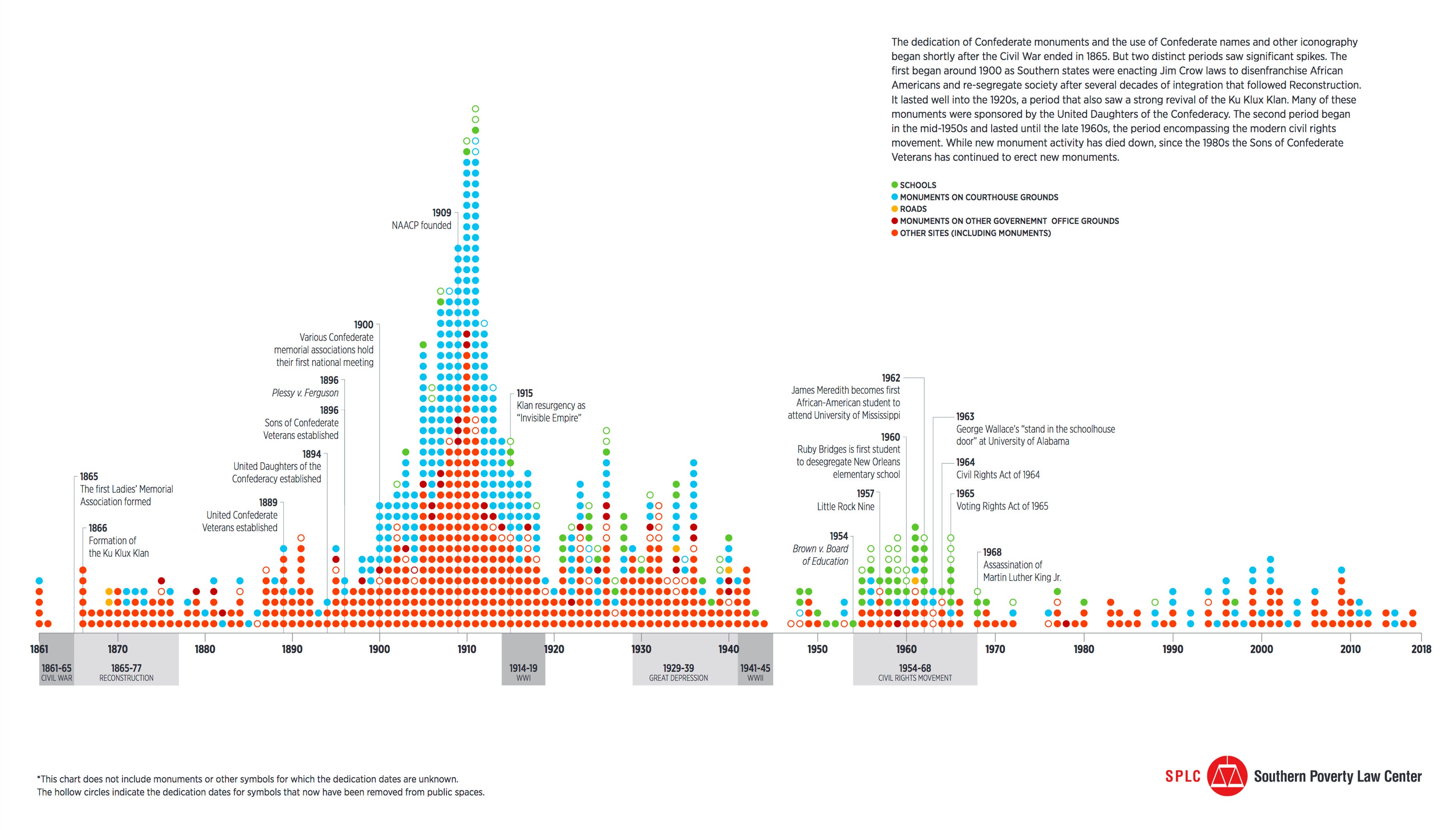
The later one, however, witnessed a sharp rise in the naming and renaming of public schools following the Supreme Court ruling in Brown v. Board of Education, which ended segregation in public spaces, including schools.
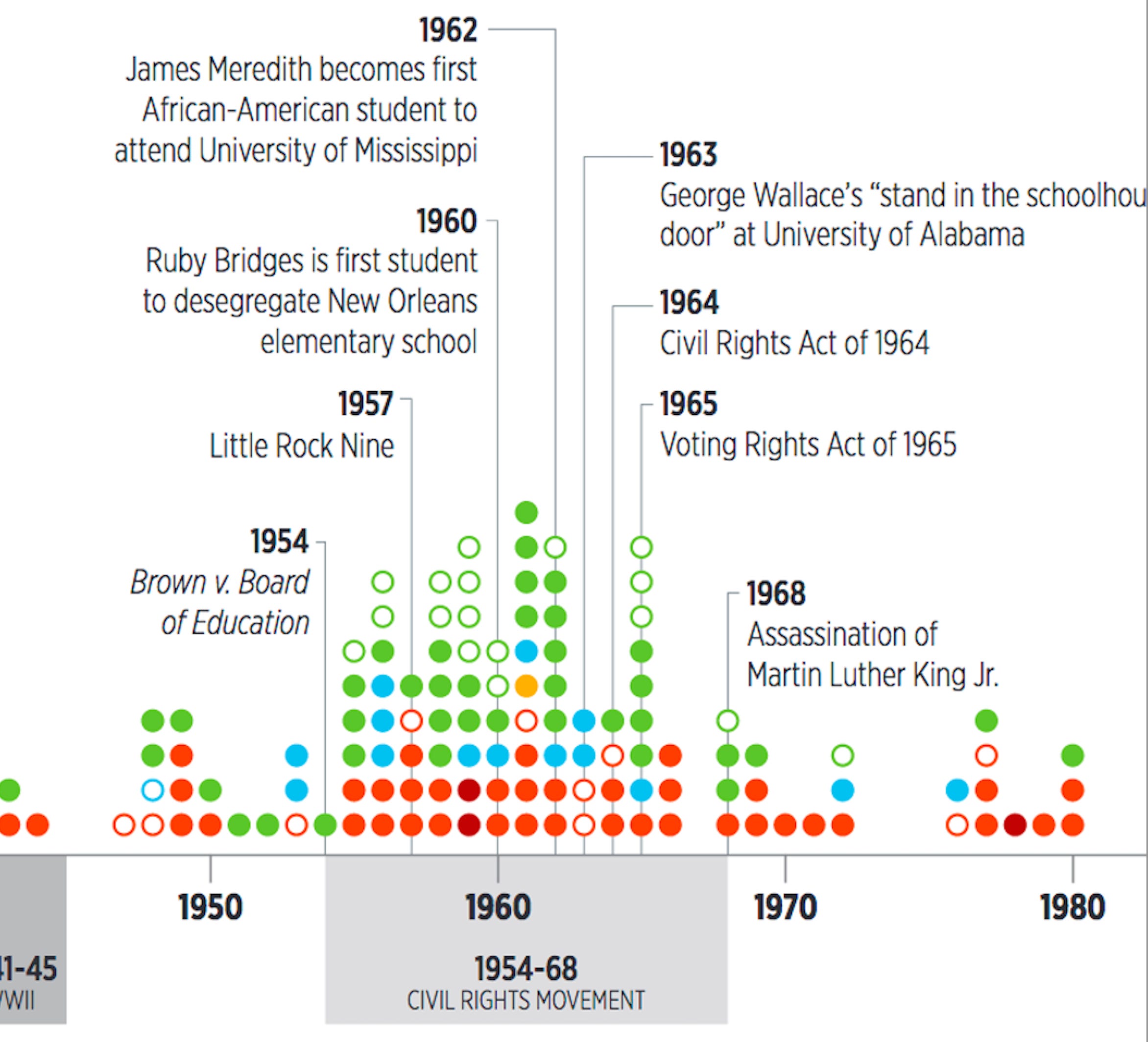
Your community, Midland, Texas, was one of a number of communities across the country, where this occurred.
According to the Equal Justice Initiative:
Historically, the practice of naming schools to honor the architects and defenders of slavery has been part of a broader effort to maintain racial hierarchy in the U.S. In particular, many schools were given Confederate-themed names in the 1950s and 1960s as Southern states mounted what they termed ‘Massive Resistance,’ a coordinated effort by governors, legislators, and other white leaders to resist the racial integration of public schools. As federal law increasingly required school desegregation, white communities built new schools—schools that were either explicitly or implicitly intended for white children only—and named those schools after white Southerners who were notorious racists.
Students at high schools and colleges embraced Confederate symbols to resist the racial integration of their schools throughout this period. It was no accident. These students knew exactly what message they were sending as did communities, like yours, that chose to name a public school in honor of Lee.
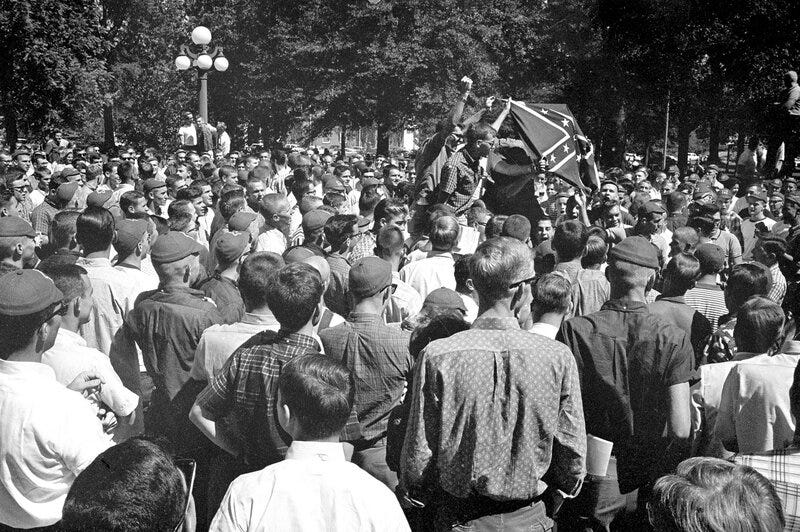
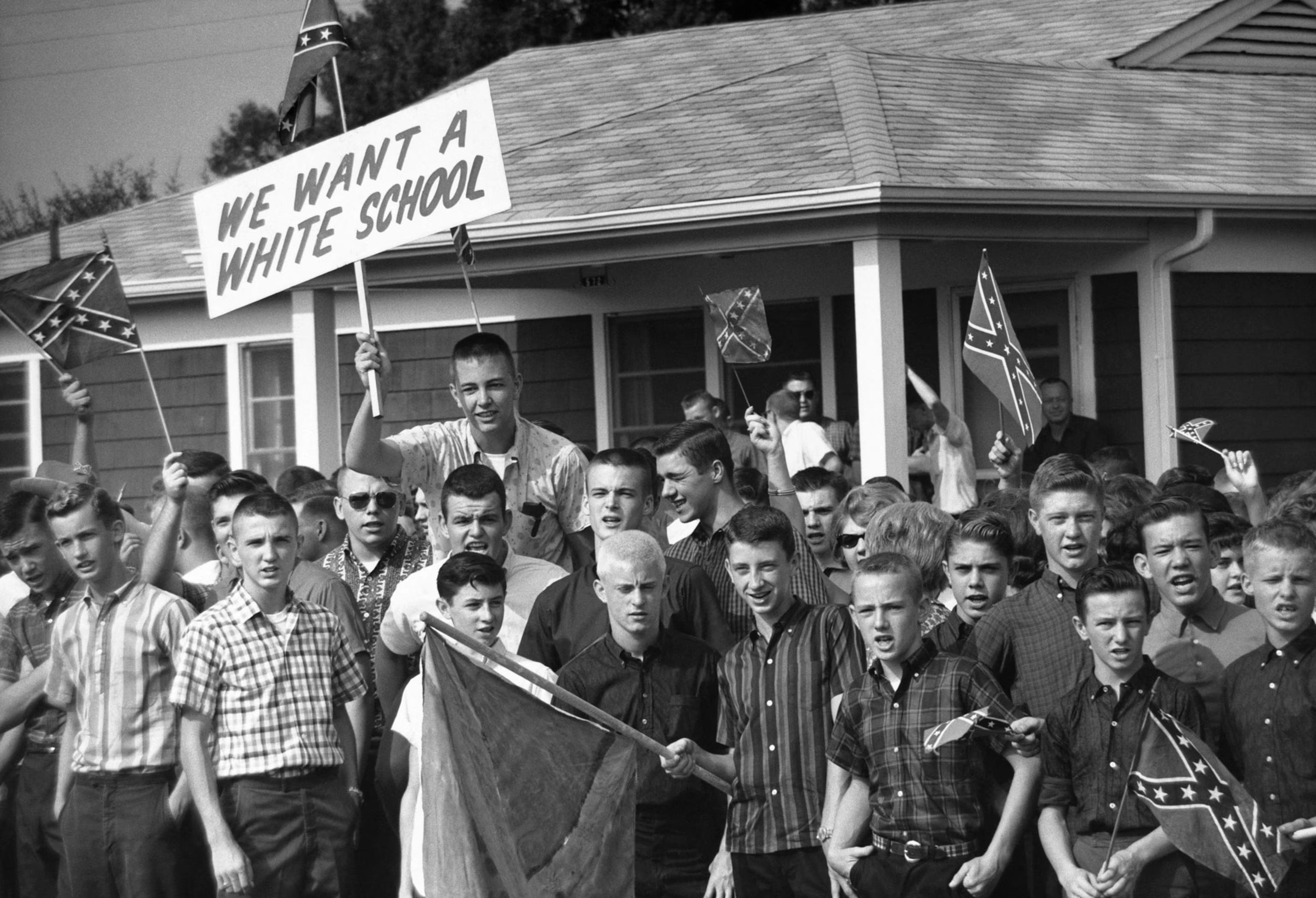
Regardless of whether he acknowledges it or not, this is the heritage that board member, Mr. Friez, believes is so important to uphold.
Do you agree with him?
Is this the heritage and set of values that represent you, your fellow students, your school community and the broader Midland community? Is this the heritage and values that you want passed down to future students?
Will you bring back the Confederate battle flag at Friday night football games?
Will you sing “Dixie”?
Is the history of Texas so barren of men and women worth honoring that the best your school community can do is, once again, embrace Robert E. Lee and a heritage of white supremacy?
Is this really who you are?
Kevin - this is such an important piece for so many people to read. I hope it will be reprinted in many places. I am going to send it to everyone I can think of to do that. You have a gift for deconstructing a fraught moment and discussing it in clear, cogent prose.
Well done. Among your best writing.